
Application context
Electrical and electronic products contain plastics, metals, ceramics, glass, solvents and chemicals. Target substances and sampling methods should be selected according to the product, components, customer requirements and controlled materials.
The original site describes the early six-substance RoHS framework: lead, mercury, cadmium, hexavalent chromium, polybrominated biphenyls (PBB) and polybrominated diphenyl ethers (PBDE). It records the EU implementation date of 1 July 2006 and a 0.1% lead limit. Its statement that China RoHS “will be implemented in the second half of 2012” is historical. These statements are not a current regulatory checklist or a compliance determination.
Materials and locations identified on the original site
| Substance | Examples in the original material |
|---|---|
| Lead (Pb) | Solder, glass, PVC stabilizers |
| Mercury (Hg) | Thermostats, sensors, switches, relays, lamps |
| Cadmium (Cd) | Switches, springs, connectors, housings, PCBs, contacts, batteries |
| Hexavalent chromium | Anti-corrosion coatings on metals |
| PBB and PBDE | Flame retardants in PCBs, connectors and plastic housings |
Product examples include refrigerators, washing machines, microwave ovens, air conditioners, vacuum cleaners and water heaters; audio/video, IT, digital and telecommunications products; power tools, electronic toys and medical electrical equipment. Regulatory scope must be checked for the product and target market.
Testing approach
Complex electronic components may not be suitable for complete grinding and homogeneous sampling. Selecting sampling locations and methods is therefore important for useful analytical results. Internal corporate environmental specifications may also cover additional substances.
The original site records Nayur's cooperation with the Ministry of Industry and Information Technology's technical promotion center for pollution control in electrical and electronic products, offering XRF instruments and application solutions for production material control.
XRF provides elemental screening. Total chromium and total bromine results do not directly identify hexavalent chromium or specific brominated flame retardants; appropriate confirmation methods may be required. Testing items, limits and decision rules must follow the applicable requirements.
Instruments recommended on the original site
| Model | Composite filters | Minimum spot diameter | Mapping | Published positioning |
|---|---|---|---|---|
| NaU1000 | 12 | 1 mm | Optional manual Mapping | General RoHS screening |
| NDA200 | 16 | 0.5 mm | Optional manual Mapping | Complex samples without disassembly |
| NDA300 | 16 | 0.5 mm | Optional automatic Mapping | Laboratories and testing organizations; electrically cooled SDD detector, identified as US-made on the original site |
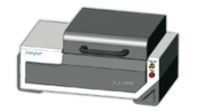
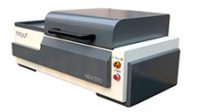
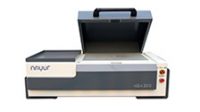
Configurations are taken from the original site. Confirm suitability for actual samples and the currently supplied configuration.